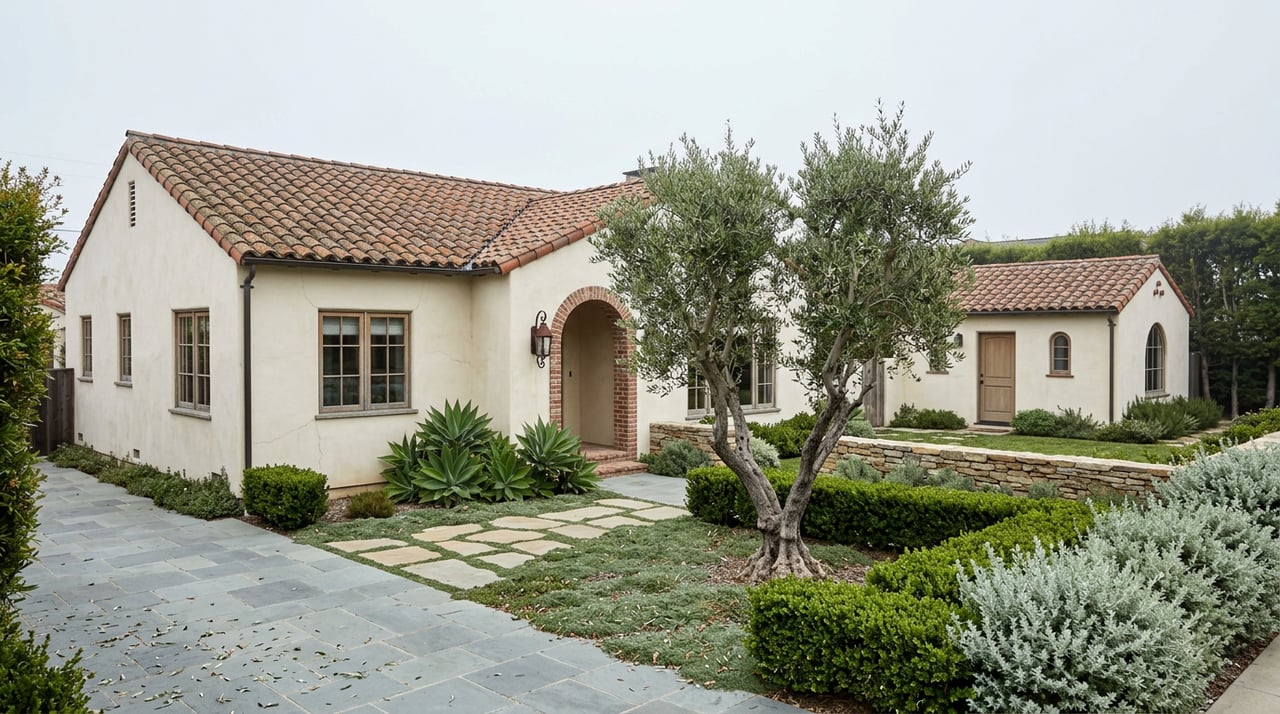
Coronado's ADU Rules Just Got Easier. One Fight Still Isn't Over.
September 17, 2026
September 17, 2026
Say you own a lot in the Village and you want to tear down the aging bungalow, build something new, and tuck a small accessory dwelling unit in the back for a parent, a renter, or a home office. On paper, that project just got more straightforward. Coronado's City Council spent the first week of September working through a list of ADU rule changes ordered by the state. Definitions got broader. A rental restriction got shorter. Ownership got more flexible in one narrow case.
But there is one rule the city has refused to touch, and it is the rule that matters most if your plan involves new construction rather than an addition to a house that already exists. Understanding which category you fall into, before you pay an architect, is the difference between a clean permit and a fight the city itself has not finished having with the state.
Coronado adopted its current ADU ordinance in April 2024. The state's Department of Housing and Community Development reviewed it and, in a findings letter sent to the city in December 2025, concluded the ordinance violated state ADU law in 31 separate places. The city had until January 9, 2026 to respond, got a 30-day extension, and sent back a formal reply on February 6, 2026, signed by Community Development Director Richard Grunow. That letter conceded the majority of HCD's findings and committed to bringing ordinance amendments to the council.
Most of those fixes finally showed up at the September 1, 2026 council meeting. The city's next meeting is scheduled for September 15 at City Hall, where further business tied to this cleanup is likely to continue.
The amendments introduced at that meeting cover ground that had been genuinely restrictive under the old ordinance:
If you already own a home in Coronado and you're adding an ADU to it, this is unambiguous good news. The path just got shorter and more forgiving than it was a year ago.
Here's where it gets more complicated. Coronado caps the total square footage allowed on a residential lot under a rule called floor area ratio, or FAR. If you own an existing home and add an ADU to it, state law protects up to 800 square feet of that ADU from counting against your FAR cap, even if your lot is already maxed out. Nobody disputes that part.
The dispute is about what happens when the ADU is proposed at the same time as a brand new house. In that scenario, Coronado currently counts every square foot of the ADU against the lot's FAR limit, which can shrink how large the primary home is allowed to be. HCD's findings letter states plainly that this is not allowed under Government Code section 66323, and directs the city to remove development standards, including maximum floor area ratio, from ADUs proposed alongside new single-family construction.
The city has declined. Its position rests on a single case: Scurlock v. City of Coronado, a 2024 Court of Appeal decision that upheld the city's practice of counting ADU square footage against FAR for new construction. City Attorney Johanna Canlis put it directly to the council:
"In fact, not very long ago, the city actually litigated this issue, and we prevailed in court."
The city's February letter goes further, stating that because the Court of Appeal already ruled the provision lawful, no further amendment is required.
Two details complicate the city's confidence. First, the Scurlock opinion is unpublished. Under California court rules, an unpublished opinion cannot be cited as precedent in other cases, which limits how much legal weight it can actually carry going forward.
Second, and more consequential, the law has moved since the case was decided. Scurlock was decided in January 2024, and it interpreted the ADU statute as it existed back when the homeowner in that case applied for permits in 2020, under the former version of Government Code section 65852.2. HCD's current findings are measured against the version of the law in effect now, not the version that governed a 2020 application. A win under the old statute does not automatically settle a question about the current one.
The tension played out publicly at a July 21, 2026 council meeting, when a resident challenged the FAR rule directly. He told the council he believed state law was clear about what the city was required to allow, and that he was running into resistance from the city as a result. He later returned to the podium and read one of HCD's specific findings aloud, arguing that the city and the state were describing two different sets of rules. At that same meeting, Councilmember Mark Fleming asked whether the city's newly approved pre-approved ADU plan program, itself required by the state's housing element process, would exclude those designs from FAR calculations. The city attorney's answer pointed back to the same municipal code provision at the center of the dispute.
As of the most recent reporting on the standoff, no public hearing date had been set to resolve it, and HCD's letter noted that if the city takes no action, the matter could be referred to the California Attorney General's office.
| If your plan is... | Where things stand |
|---|---|
| Adding an ADU to a house you already own | Settled. The September amendments apply, and your ADU's square footage does not count against your FAR cap up to 800 square feet. |
| Building a new house and an ADU together | Unresolved. Coronado is still counting the ADU's full square footage against your FAR limit, defending that position with a legal precedent the state disputes and that carries less weight than it appears to. |
If you're renovating or adding onto an existing home, the calculus is simple now. The September changes remove real friction, and you can plan an ADU addition with more confidence about rental terms and design flexibility than the ordinance allowed a year ago.
If your plan involves tearing down and building new construction with an ADU as part of the same project, treat the FAR question as an open variable rather than a settled fact. Ask the Community Development Department directly how they intend to calculate your allowable square footage before you finalize architectural plans, because the answer today may not be the answer in six months if the city and HCD reach a different resolution or if the matter escalates. Watching the city's published council agendas is worth the five minutes it takes, since this is a live issue rather than a closed one.
For anyone managing this from a distance, whether that's a PCS move that has you designing a rental unit for extra income while stationed elsewhere, or an investment property where an ADU is part of the return calculation, this is exactly the kind of local detail that doesn't show up in a general ADU guide. It shows up in a council meeting transcript and a state agency's letter.
Does this affect an ADU I already have permitted or built? The dispute concerns new applications, particularly ones pairing new construction with an ADU. Units already permitted under the prior rules are a separate conversation to have with the city directly.
Can I still use my ADU as a short-term rental? The September changes shift the minimum rental term for standard ADUs to 30 days, which is a meaningful change from the prior six-month floor. Confirm current requirements with the city before listing, since short-term rental rules and transient occupancy tax obligations are handled separately from the ADU ordinance itself.
Where can I track what happens next? The city posts its council agendas and minutes publicly, and it's the most direct way to see whether the FAR question moves toward a hearing or another round of negotiation with the state.
Coronado's ADU rules are genuinely more workable today than they were in August. But the biggest question for anyone building new construction with an ADU attached to it is still open, and the city's own legal defense has more holes in it than its public statements suggest. If you're weighing a project like this, it's worth a real conversation before you commit to a design.
The Foley Group works with Coronado homeowners and investors on exactly this kind of timing question, from ADU additions to full teardown-and-rebuild projects. Let's Connect before you finalize plans that depend on a rule the city and the state are still arguing about.
Stay up to date on the latest real estate trends.


You’ve got questions and I can’t wait to answer them.